Local pest service scheduling is the process of coordinating professional pest control visits through service agreements, routing logistics, and customer communication. Understanding how this system works gives you real control over your appointments, your contract terms, and the results you get. Most homeowners sign up for service without reading the fine print, then wonder why a technician shows up at an unexpected time or why canceling costs them $300. This guide covers the full local pest control process, from contract terms to appointment windows, so you can schedule smarter and get better outcomes.
How does pest control service scheduling work?
Pest control scheduling is built on three layers: the service agreement, the technician's route plan, and your communication with the provider. Each layer affects when a technician arrives, how long they stay, and what they treat. Miss any one of these, and you end up with missed appointments, incomplete treatments, or surprise fees. Knowing how they connect is the first step to getting consistent, effective service.
How pest control service agreements determine scheduling
A pest control service agreement is the contract that sets your visit frequency, covered pests, pricing, and cancellation rights. Most providers offer two structures: annual contracts and month-to-month plans. Annual contracts lock in a lower per-visit price but come with early termination fees and stricter cancellation rules. Month-to-month plans cost more per visit but give you flexibility to cancel with 30 days' written notice.
Understanding how local pest control service contracts work starts with knowing what frequency options exist. The three most common cadences are:
- Quarterly service: One visit every 90 days, covering general pest prevention. This is the most popular plan for homes without active infestations.
- Monthly service: One visit per month, typically used for active infestations or high-risk properties near wooded areas or standing water.
- As-needed or one-time treatments: Single visits for specific problems like a bed bug outbreak or a wasp nest removal.
Recurring visits follow set cadences, with software automatically generating the next appointment based on your plan. Delays beyond two weeks from the scheduled date can reduce treatment effectiveness and erode trust with your provider.
Every agreement also includes terms that directly affect your scheduling flexibility. Watch for these three clauses before you sign:
- Auto-renewal clauses: Most annual contracts auto-renew unless you cancel within 30 to 60 days before the renewal date with written notice. Missing that window binds you to another full year.
- Early termination fees: Breaking an annual contract early typically costs between $150 and $500. That range reflects the remaining visits left on your plan.
- Cancellation notice periods: Month-to-month plans require 30 days' notice. Annual plans often require 30 to 60 days, and some require certified mail.
Pro Tip: Read the auto-renewal clause before you sign. Set a calendar reminder 45 days before your contract anniversary so you never miss the cancellation window.
What happens behind the scenes: route planning and appointment windows
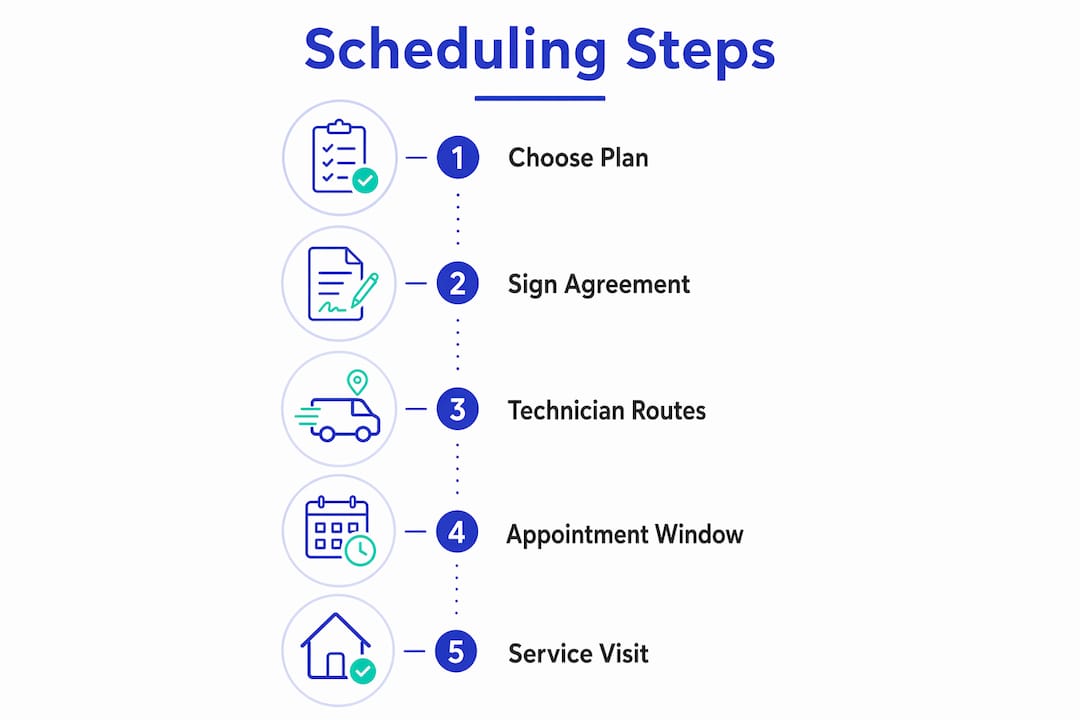
Residential pest control technicians typically complete 15 to 25 stops per day, organized by geography and treatment type. That number tells you something important: your technician is running a tight route, and small delays at one stop ripple through the rest of the day.

Routing software sorts stops into two categories based on access type. This distinction directly affects when you can expect a technician.
| Access type | Scheduling flexibility | What it means for you |
|---|---|---|
| Exterior-only | High. Can be routed at any time. | Technician treats the outside without you home. |
| Homeowner-required (interior) | Low. Needs a confirmed time window. | You must be present. Arrival windows are set in advance. |
| Mixed (interior and exterior) | Moderate. Requires coordination. | Confirm your availability at booking to avoid rescheduling. |
Exterior-only visits allow flexible "anytime" routing, while interior treatments require you to be home during a specific window. If you do not clarify your access needs at booking, the system may place you in an "anytime" route by default, which means a technician could arrive at 7 a.m. or 5 p.m.
A 60-minute arrival window is a promise to arrive within that timeframe, not an exact time. The window only gets confirmed when dispatch reviews the route that morning. Calling after hours to schedule rarely produces a same-day visit. After-hours calls typically book the earliest available slot on the next business day.
Pro Tip: Call before 9 a.m. on the day of service to confirm your arrival window. Dispatch finalizes routes early, and a quick call can get you a tighter time estimate.
How homeowners can prepare for and influence their scheduling
You have more control over the scheduling experience than most providers will tell you. Taking a few steps before and during booking produces better results and fewer surprises.
-
Clarify your access type at booking. Tell the scheduler whether you need interior treatment or exterior-only service. This determines which route type you land on and directly affects your arrival window.
-
Request written confirmation of your appointment. Ask for a confirmation email or text that includes the date, time window, and technician name. This protects you if there is a dispute about a missed visit.
-
Describe your pest problem in detail. A general "I have ants" call gets you a standard appointment slot. Telling the scheduler you have a large carpenter ant trail near your foundation may get you a longer appointment or a specialist.
-
Match your expectations to treatment time. Preventive treatments take 15 to 30 minutes. Active infestation treatments run 90 to 120 minutes or more, depending on severity. Block out the right amount of time so you are not caught off guard.
-
Handle no-shows in writing. If a technician misses your appointment without notice, send a written message to the company that day. Document the missed visit with a date and time. This record matters if you later need to negotiate a contract change or cancellation.
These steps apply whether you are scheduling pest services for the first time or managing a recurring plan. Clear communication at every stage reduces rescheduling, improves treatment outcomes, and keeps your contract working in your favor.
Common pitfalls and how to negotiate pest control service contracts
The biggest mistake homeowners make is signing a contract without understanding the exit terms. Auto-renewal clauses and early termination fees are the two most common sources of frustration in the local pest control process.
Early termination fees range from $150 to $500 for annual contracts. The exact amount usually reflects how many visits remain on your plan. Some providers calculate it as a flat fee. Others charge the full cost of remaining visits at the regular rate.
Before you cancel any pest control contract, document every service issue in writing. A record of missed visits, incomplete treatments, or unresolved infestations gives you grounds to negotiate a fee waiver or early exit.
To negotiate a pest control service contract effectively, use these approaches:
- Ask for a shorter initial term. Many providers offer six-month trials. A shorter term reduces your exposure to termination fees if the service does not meet your expectations.
- Request a price lock. Ask the provider to commit to a fixed per-visit price for the full contract term. Without this, rates can increase at renewal.
- Negotiate a free re-treatment guarantee. Reputable providers, including Homefixnow, offer to return at no charge if pests come back between scheduled visits. Get this in writing before you sign.
- Confirm the cancellation process in writing. Written cancellation notices sent via email or certified mail with receipt confirmation protect you from disputes about whether you gave proper notice.
The University of Florida's Institute of Food and Agricultural Sciences notes that thorough site inspections covering entry points, nesting areas, and conditions that attract pests produce better long-term results than low-cost quotes. A provider who skips the inspection to offer a lower price is cutting the step that determines treatment accuracy.
Key Takeaways
Effective pest service scheduling requires understanding your contract terms, access type, and appointment window expectations before your first visit.
| Point | Details |
|---|---|
| Know your contract type | Annual contracts offer lower prices but carry $150–$500 termination fees and strict cancellation windows. |
| Clarify access type at booking | Exterior-only visits allow flexible routing; interior treatments require a confirmed time window and your presence. |
| Expect realistic arrival windows | A 60-minute window is a range, not an exact time. Dispatch confirms it the morning of your visit. |
| Match appointment length to pest type | Preventive treatments take 15–30 minutes; active infestations run 90–120 minutes or more. |
| Document everything in writing | Written records of missed visits and service issues give you leverage to negotiate or cancel a contract. |
What I've learned from watching homeowners navigate pest scheduling
Most homeowners focus on price when choosing a pest control provider. That instinct is understandable, but it is usually the wrong priority. The providers who offer the lowest quotes tend to rush the initial inspection, and a rushed inspection means a treatment plan built on guesswork. I have seen this pattern repeatedly: a homeowner saves $30 on the first visit and then spends months dealing with a recurring infestation because the technician never identified the entry points.
The detail that surprises most people is how much the access type declaration at booking shapes their entire scheduling experience. If you do not tell the scheduler you need interior treatment, you may end up in an "anytime" route for months without realizing it. That one conversation at booking is worth more than any negotiation tactic.
My honest recommendation: treat the initial inspection as the most important part of the relationship. Ask the technician to walk you through what they found, where they treated, and why. A provider who can answer those questions clearly is one worth keeping on a recurring plan. A provider who cannot is one worth canceling, even if it costs you a termination fee.
— Mohthshim
Homefixnow makes pest service scheduling straightforward
Scheduling pest control should not feel like a negotiation with fine print. Homefixnow offers flexible pest control scheduling with transparent service agreements, clear arrival windows, and a satisfaction guarantee that brings technicians back at no charge if pests return between visits.
Homefixnow's licensed technicians conduct thorough initial inspections before recommending any treatment plan. You get a written confirmation of every appointment, a clear explanation of what was treated, and no hidden fees. Whether you need a one-time treatment or a recurring quarterly plan, Homefixnow builds the schedule around your access needs and availability. Call today for a free inspection and estimate.
FAQ
How does a pest control service contract work?
A pest control service contract sets your visit frequency, covered pests, pricing, and cancellation terms. Annual contracts typically include early termination fees between $150 and $500, while month-to-month plans require 30 days' written notice to cancel.
What is a typical pest control appointment window?
A standard arrival window is 60 minutes. Dispatch confirms the exact window on the morning of your service, so calling early that day gives you the most accurate estimate.
How do I cancel a pest control contract without paying a fee?
Send written cancellation notice via email or certified mail within the required notice period, typically 30 to 60 days before your renewal date. Document any missed visits or service failures, as these give you grounds to request a fee waiver.
How long does a pest control visit take?
Preventive treatments take 15 to 30 minutes. Active infestation treatments run 90 to 120 minutes or more, depending on the pest type and severity of the problem.
What happens if I am not home for my pest control appointment?
Exterior-only treatments can proceed without you present. Interior treatments require you to be home, so a missed appointment typically results in rescheduling. Confirm your access type with your provider at booking to avoid this situation.